

Electric mobility is moving into the mainstream as both vehicles and infrastructure scale worldwide. According to IEA, over the past few years, more than 17 million electric cars were sold globally, representing more than 20% of all new cars. During this period, more than 1.3 million public EV charging points added to the global network. These trends show that eMobility adoption and charging infrastructure build-out are accelerating.
In this article, you’ll find out more about the role of a software development partner in the electric mobility sector. Besides, you’ll explore the top 10 eMobility software development companies, and find out what to look for in custom e-mobility applications.
Explore the EV charging management software expertise by Intelliarts, in our success story with a large Saudi Arabia’s E-mobility provider.
What makes a top eMobility software development company?
To begin with, let’s define what software development in e-mobility is, to separate it from other dev niches:
Software development in e-mobility is the design, implementation, and maintenance of digital systems that enable electric transportation.
Naturally, the goal of custom software development emobility is to enable vehicles and other transportation-related devices to operate reliably, efficiently, and at scale. This dev domain sits at the intersection of automotive engineering, energy systems, IoT in EV charging, and cloud software.
And here’s what expertise, bits of knowledge, and direct contributions that a trusted provider brings to your electric mobility project:
- Expertise in EV infrastructure and smart charging platforms. Providers design software around real charging infrastructure constraints. They implement charger management, smart charging logic, and load balancing. This expertise allows providers to prevent downtime, avoid grid overloads, and optimize charging performance.
- Scalable architecture for fleets and charging networks. Providers architect platforms with growth in mind. They account for rising numbers of vehicles, chargers, users, and data streams. Through modular and cloud-native design, providers ensure systems remain reliable as operations scale across regions.
- Regulatory and standards-driven development. Providers embed compliance requirements directly into system design. They work with standards such as OCPP, ISO 15118, GDPR, OCPI, and regional energy regulations to make your solution compliant. This reduces regulatory risk and enables faster, smoother market expansion.
- Enterprise-grade system integration. Providers connect electric mobility platforms with Enterprise Resource Planning (ERP) systems for finance and operations and with Transportation Management Systems (TMS) for logistics. They also integrate fleet management, billing, and energy management systems to support vehicle tracking, payments, and power monitoring.
- Operational insight into eMobility data and workflows. Providers understand how EV systems behave in production environments. They work with vehicle telemetry, charger-to-cloud communication, and energy usage data. This enables providers to support monitoring, fault detection, and long-term optimization.
You may also be interested in exploring custom software development emobility expertise based on an example of a trusted partner like Intelliarts.

The top 10 eMobility software development companies
Now, let’s get to the comprehensive overview of the top 10 eMobility software development partners, which you may consider for your best project. Remember, the comparison is based on publicly available information. For more focused insights, we recommend contacting the provider of your choice for additional information.
1. Intelliarts
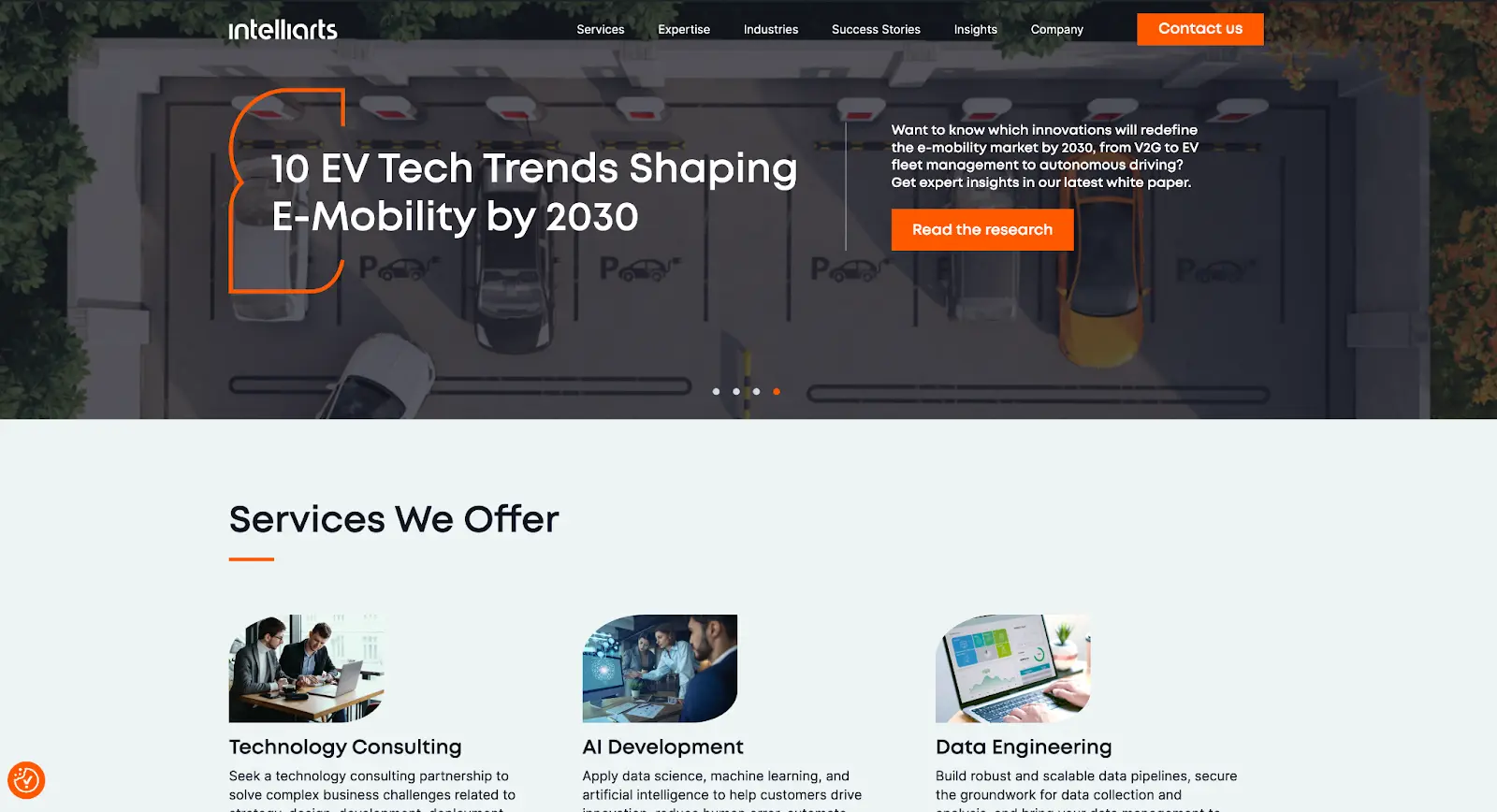
Intelliarts is a software engineering and AI/ML services company with over 25 years on the market and over 9 years of specialization in eMobility software solutions. The company partners with enterprises and mid-sized businesses across eMobility, agritech, insurance, and digital marketing and has delivered 90+ large-scale projects for clients worldwide, including EVConnect, Indigo Ag, Greenlane, and Schneider Electric.
The firm has been recognized among the Top 100 Software Development Companies of 2026 by industry reviewers.
Services offered
- Custom software development
- Technology consulting
- Machine learning and LLM solutions
- Data engineering and analytics
- IoT solutions
Expertise in EV software solutions
- EV charge point management systems
- Charging network platform development
- Fleet and energy management systems
- Integration with energy and enterprise systems
- Predictive analytics and operational dashboards
Intelliarts stands out in the electric mobility sector by combining deep technical engineering with operational insight into EV charging management software, smart charging platforms, and more. Our engineering teams work directly with OCPP, OCPI, OpenADR, and ISO 15118 to strengthen interoperability, roaming readiness, and compliance. Over 40% of our engineers are senior-level specialists, enabling faster architectural decisions and fewer redesign cycles as platforms scale. With an average partnership length of 4+ years, our EV charging management software is built to run reliably in long-term, high-load environments.
#2 EV Connect
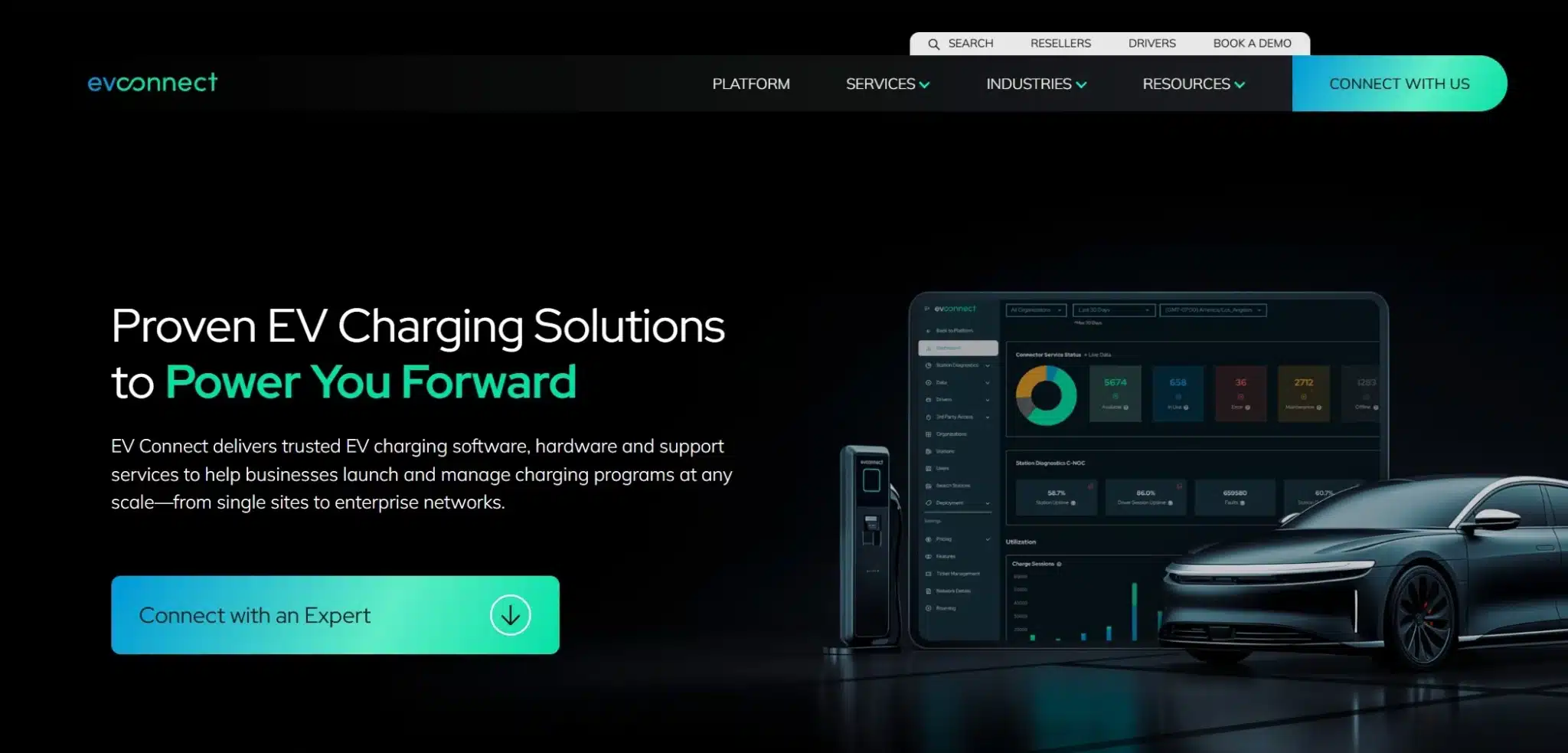
EV Connect offers cloud-based EV charging management software aimed at site hosts and network operators. Its platform focuses on operational control, visibility, and ease of deployment.
Services offered
- Charging management software
- Network monitoring tools
- Driver-facing interfaces
- Analytics and reporting dashboards
- Access and user management
EV software expertise
- Real-time charger status monitoring
- Session and usage tracking
- Billing and payment support
- Infrastructure integration
- Operational performance reporting
Interesting fact: EV Connect is actually a partner of Intelliarts, as these companies have had multiple projects, as for example, a predictive maintenance solution for EV chargers.
#3 ChargePoint
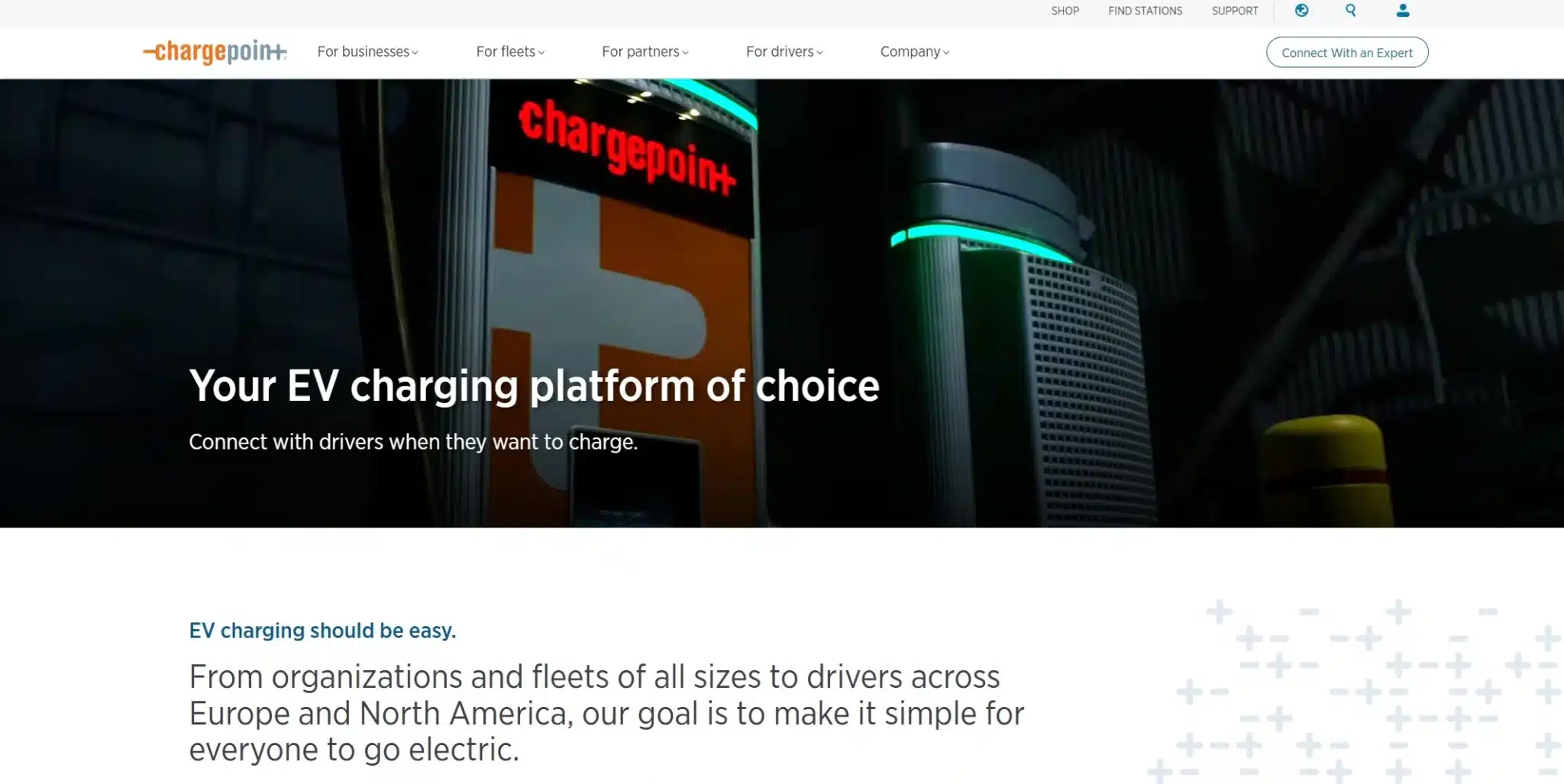
ChargePoint is a global electric mobility company operating one of the world’s largest EV charging networks. Its software platforms support large-scale charging operations, driver interaction, and network-level analytics across commercial and public environments.
Services offered
- EV charging network software
- Charging station operations management
- Mobile applications for drivers
- Network analytics and reporting tools
- Access control and user management
EV software expertise
- Real-time charger monitoring
- User authentication and authorization
- Session management and scheduling
- Usage analytics and performance tracking
- Network reliability and uptime management
#4 EVBox
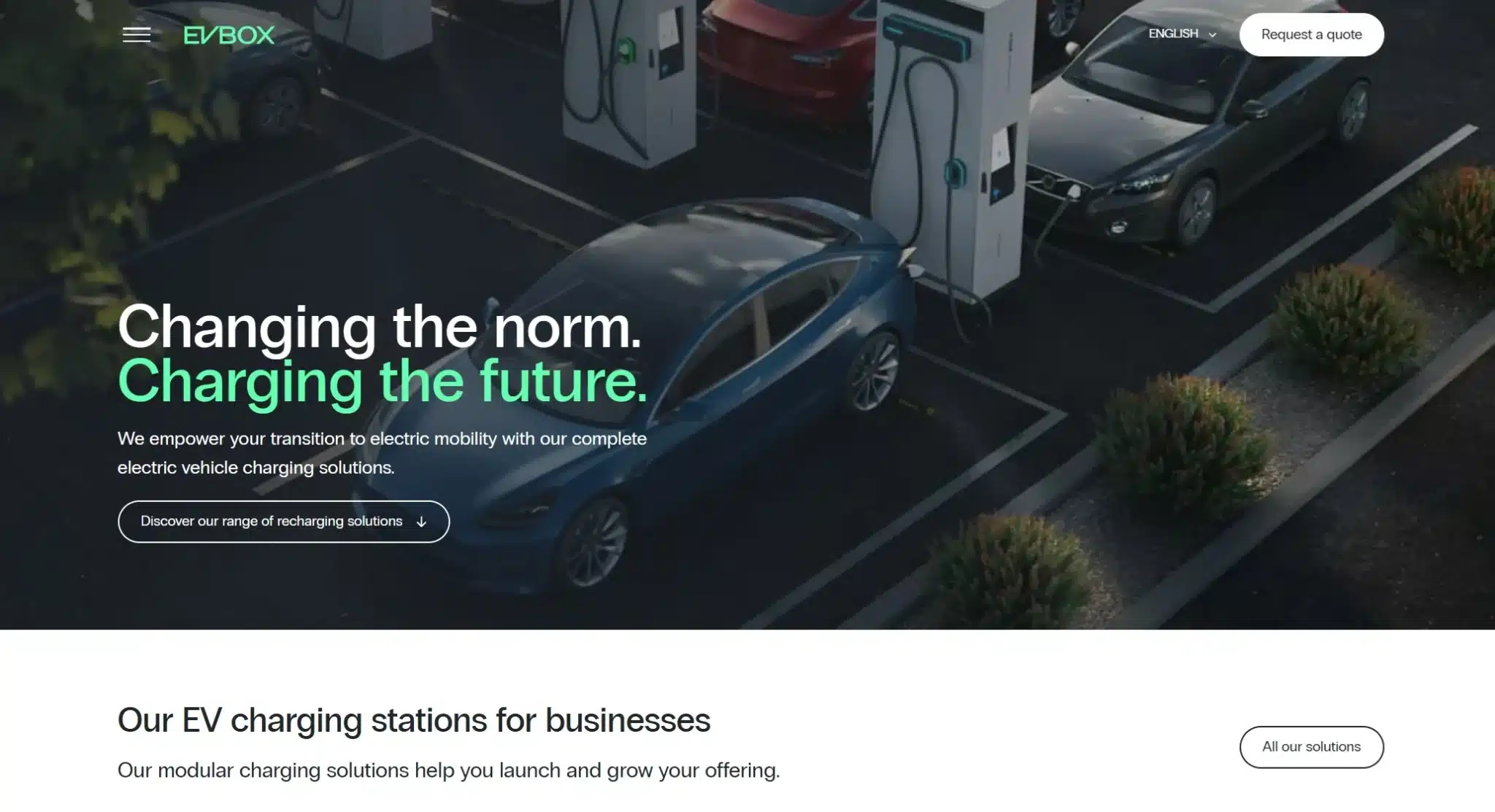
EVBox develops EV charging management software for businesses, municipalities, and charge point operators. Its platforms are designed to support diverse charging use cases and integration within broader energy ecosystems.
Services offered:
- Charging management platforms
- Network monitoring dashboards
- Operational analytics tools
- System integration services
- User and asset management
EV software expertise:
- AC and DC charging support
- Multi-site charging network management
- Energy usage monitoring
- Integration with renewable energy systems
- Reporting and compliance support
#5 Driivz
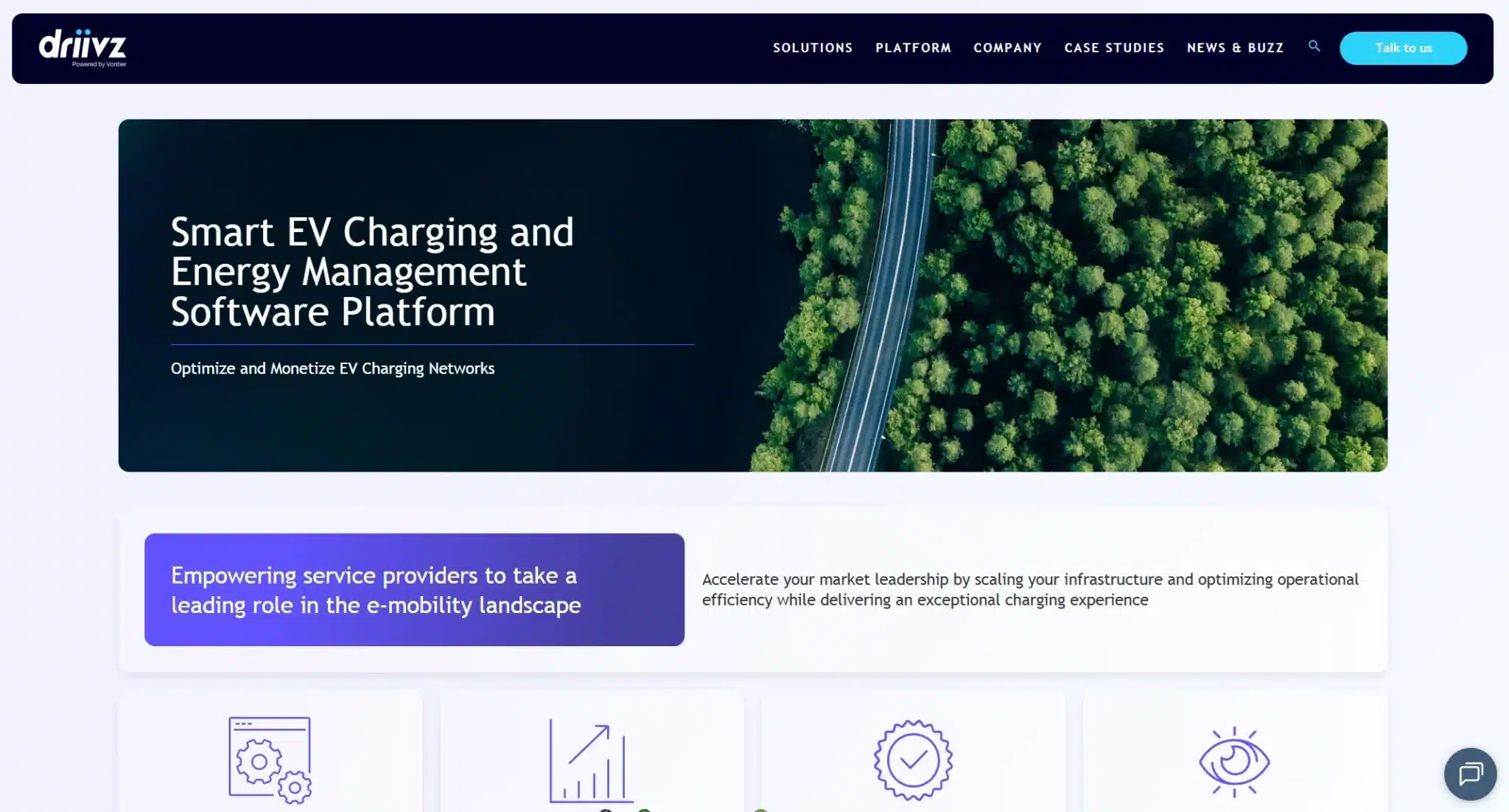
Driivz provides cloud-based EV charging and energy management software used by utilities, fleets, and charge point operators. The platform emphasizes monetization, scalability, and grid-aware charging operations.
Services offered:
- EV charging management platform
- Billing and settlement systems
- Energy demand management tools
- User and partner portals
- Network operations dashboards
EV software expertise:
- Smart charging and load management
- Utility and grid integration
- Tariff and pricing configuration
- Multi-tenant platform architecture
- Operational analytics and reporting
#6 AMPECO
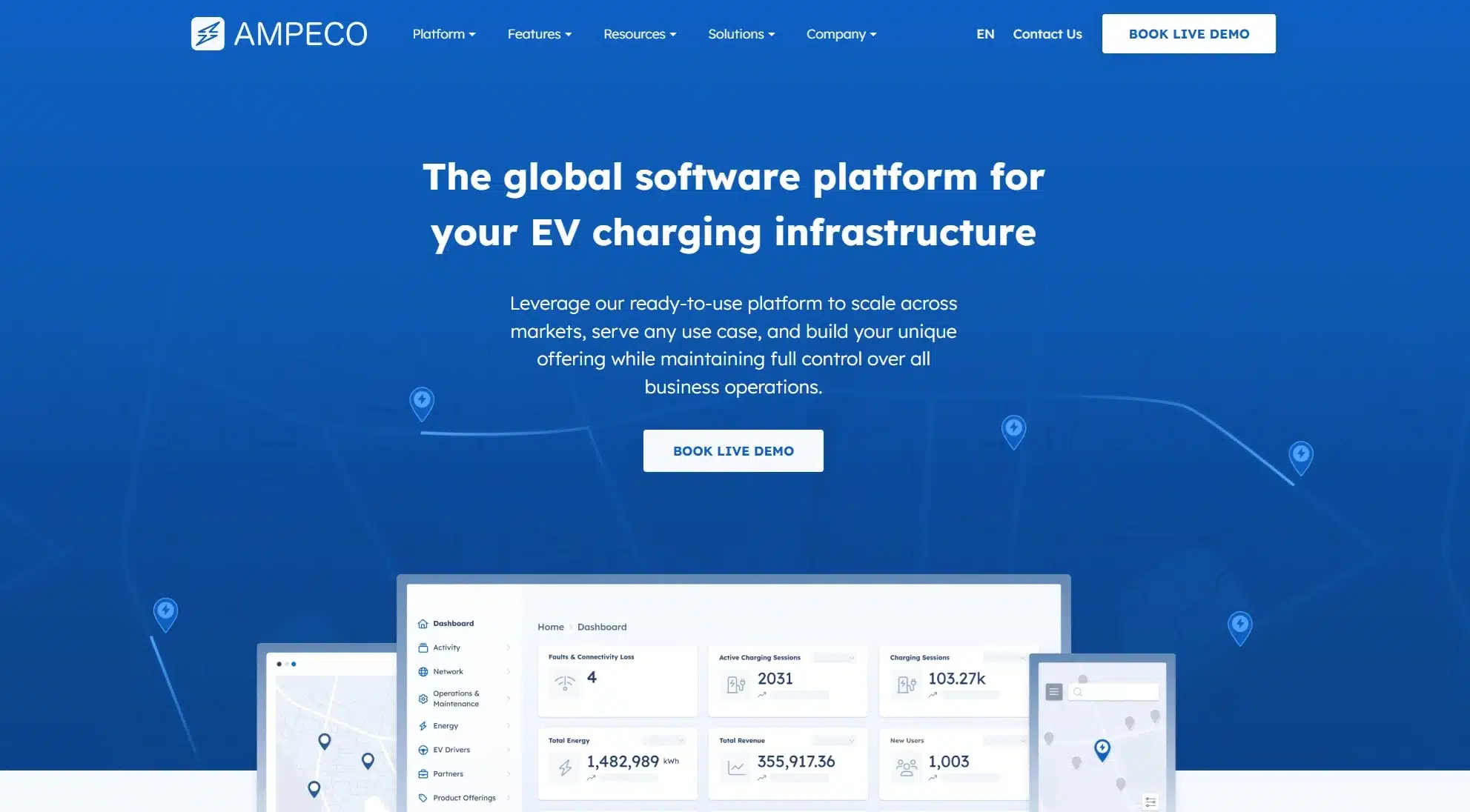
AMPECO delivers a white-label EV charging software platform designed for operators managing complex charging networks. Its solution supports customization, scalability, and third-party integrations.
Services offered:
- EV charging infrastructure software
- White-label mobile and web applications
- Operator and driver portals
- API and integration services
- Billing and payment management
EV software expertise:
- OCPP-compliant charging control
- Scalable fleet and station management
- User access and role management
- Pricing and tariff configuration
- Reporting and operational insights
#7 Shell Recharge Solutions
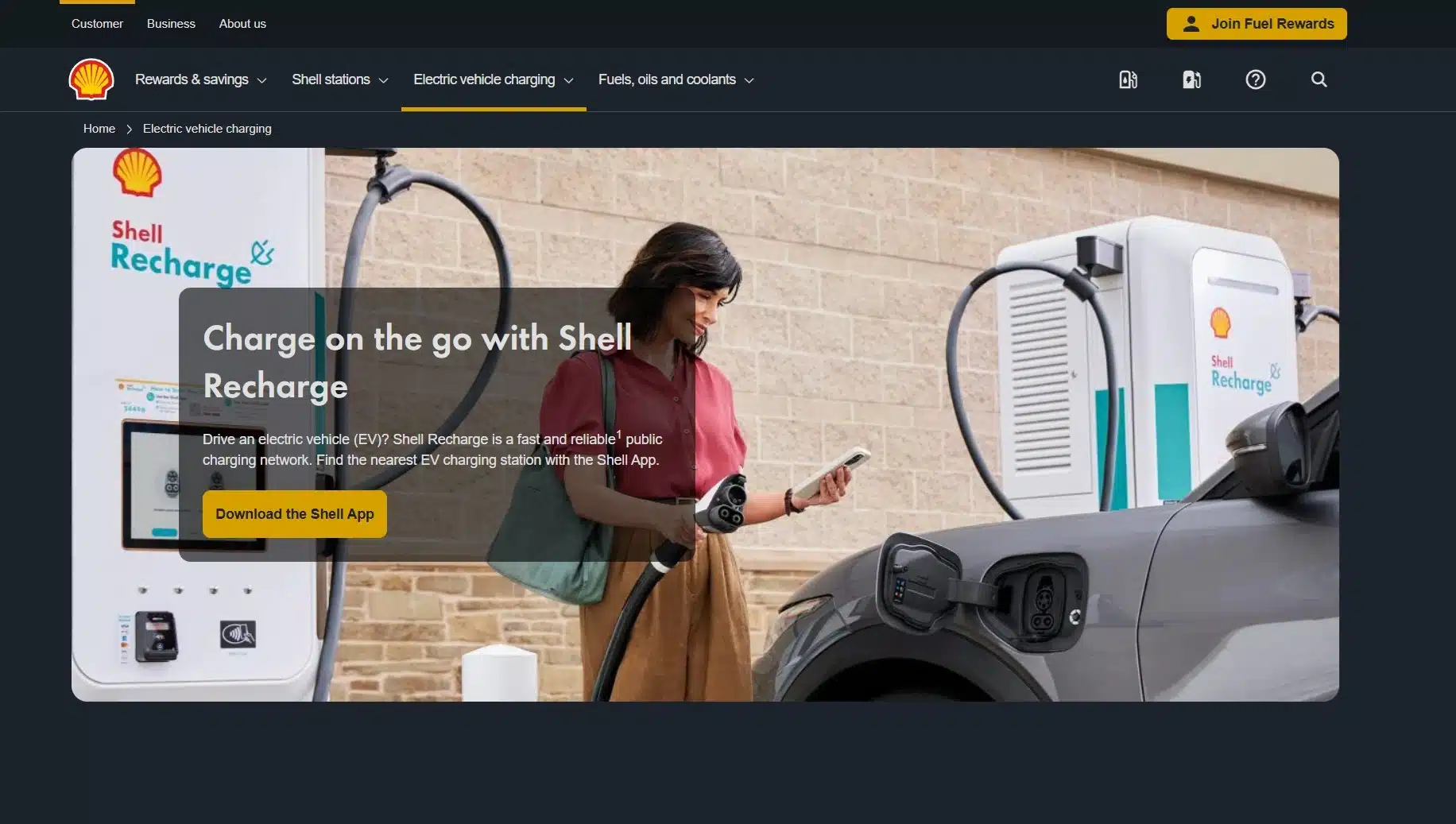
Shell Recharge Solutions provides EV charging software as part of Shell’s electric mobility portfolio. Its platforms support public and commercial charging networks with a focus on usability and scale.
Services offered:
- Charging network management software
- Mobile applications for drivers
- Payment and billing solutions
- Network monitoring tools
- Operational analytics
EV software expertise:
- User authentication and access control
- Payment processing workflows
- Charger availability monitoring
- Network performance analytics
- Integration with broader mobility services
#8 ChargeLab
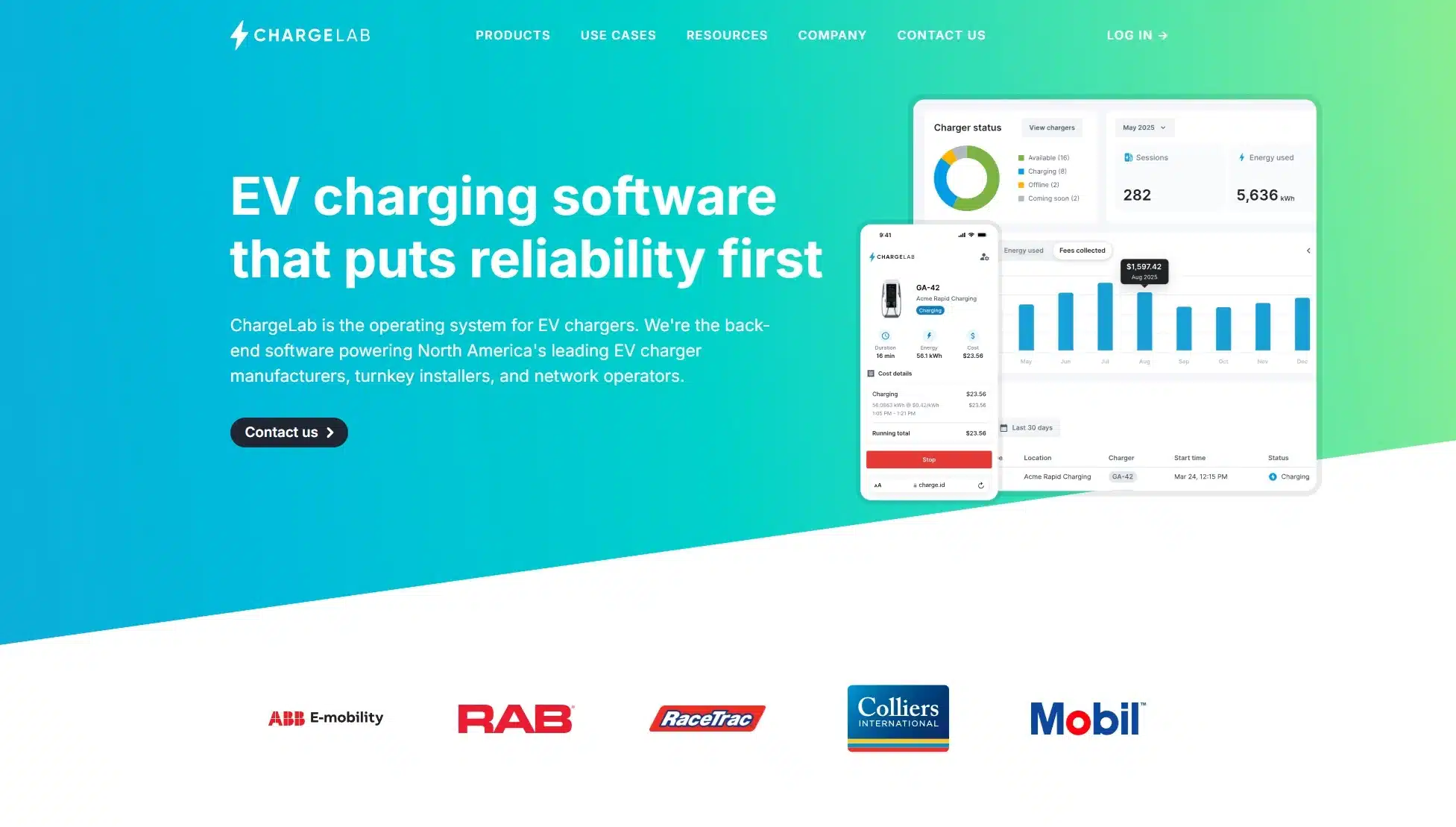
ChargeLab is an EV charging software provider focused on flexible deployments and partner-centric ecosystems. Its platform is commonly used by operators seeking adaptable and integration-friendly solutions.
Services offered:
- Charging management software
- Operator dashboards
- API and partner integrations
- Billing and pricing tools
- Analytics and reporting
EV software expertise:
- Live charging network visibility
- Session and usage tracking
- Custom billing workflows
- Integration with third-party systems
- Scalable deployment models
#9 Current
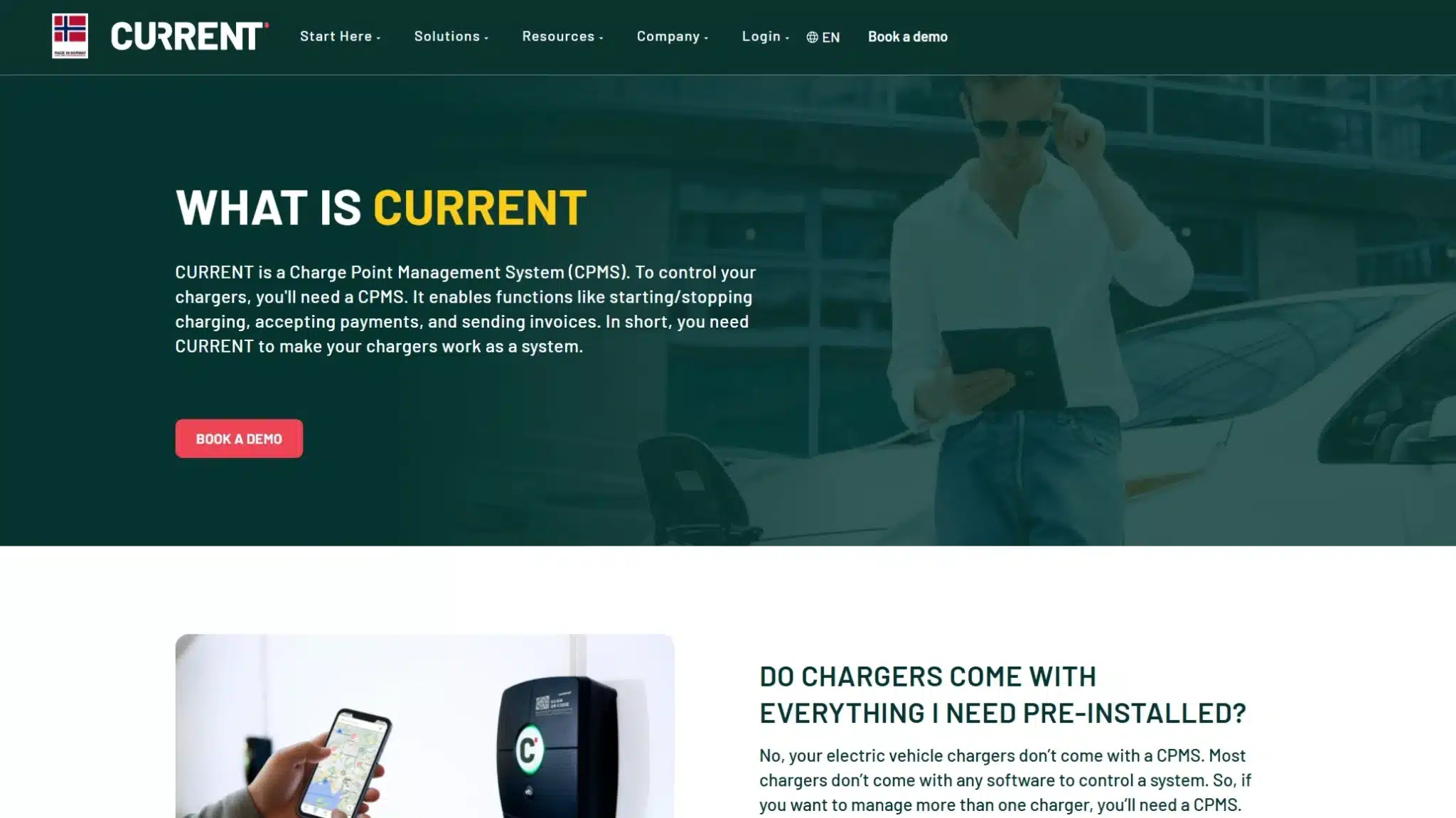
Current develops EV charging management software tailored to fleet and public charging environments. Its solutions focus on operational visibility and straightforward charging network management.
Services offered:
- EV charging management software
- Fleet-oriented operational tools
- Network monitoring dashboards
- Usage reporting features
- Basic user management
EV software expertise:
- Charging station integration
- Fleet charging coordination
- Session tracking and reporting
- Operational visibility tools
- Basic analytics capabilities
#10 YoCharge
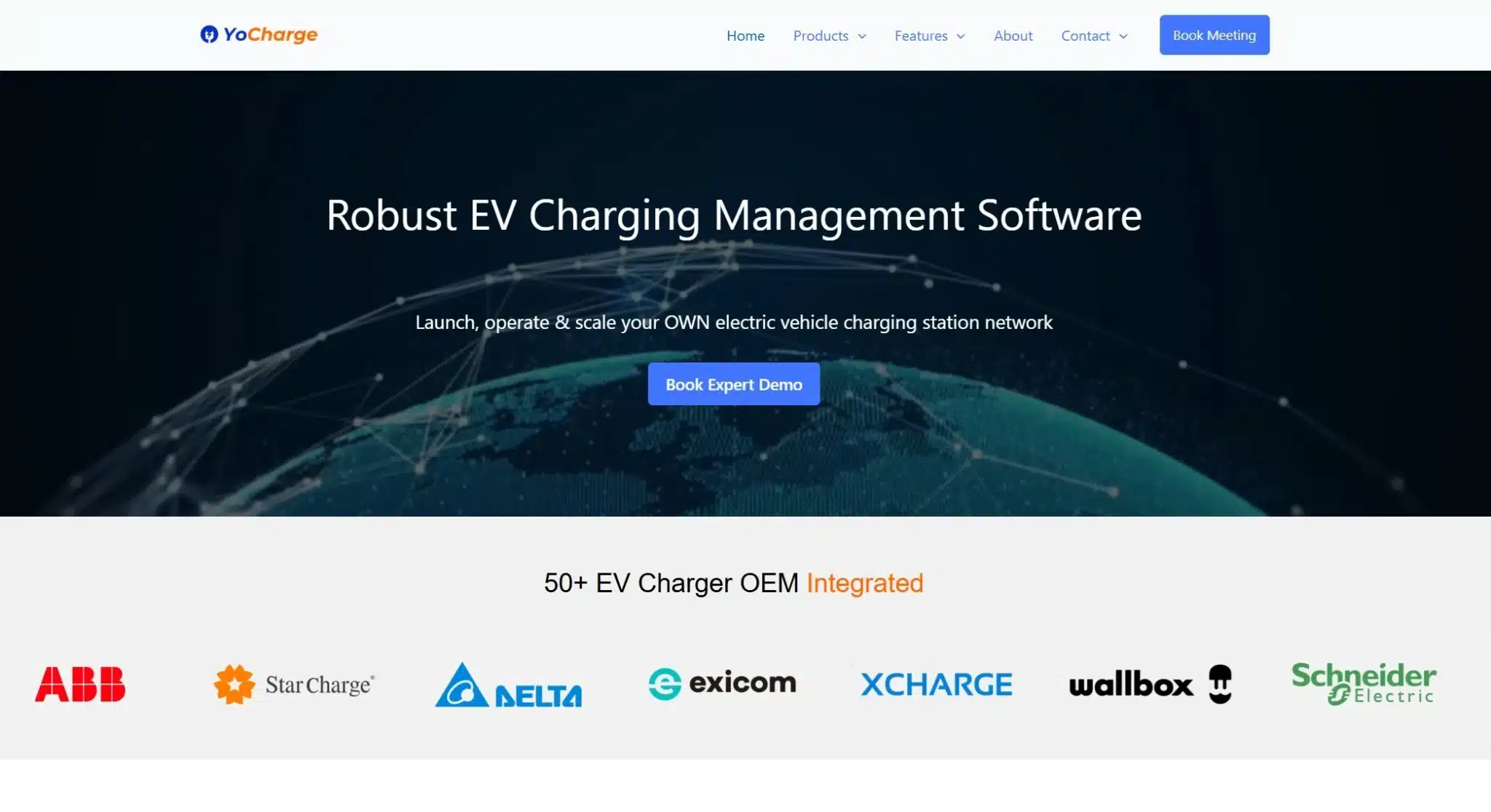
YoCharge provides EV charging management software with an emphasis on white-label deployments and flexible payment options. Its platforms are used across commercial and residential charging setups.
Services offered:
- EV charging management platform
- Branded mobile applications
- Operator dashboards
- Payment and billing tools
- Real-time station control
EV software expertise
- QR-based charging workflows
- Payment gateway integration
- Session monitoring and control
- User and access management
- Operational reporting tools
You may also be interested in exploring the list of top electric mobility solutions in another our blog post.
How to choose the right eMobility software development partner
Choosing the right partner for eMobility software development determines how well your electric mobility initiatives perform in real operations. In the fast-moving industry, software must support infrastructure, energy systems, and business processes at scale.
Looking for a trusted provider of software services for renewable energy & e-mobility? Reach out to Intelliarts and let our experts consult you.
Key factors to consider when choosing a software development partner
The following factors help distinguish capable long-term partners from short-term vendors. They should guide you whether you are choosing an off-the-shelf product or getting ready for a custom electric mobility project:
#1 Fleet size and operational complexity
Fleet size refers to the number of electric vehicles, charging points, users, and operational scenarios a platform must support. In eMobility software development, this also includes vehicle usage patterns, charger density, geographic spread, and daily operational load.
Fleet complexity directly impacts performance and reliability. Providers without relevant experience may underestimate system load or operational edge cases. A partner familiar with similar deployments reduces risk and improves delivery predictability.
Key considerations:
- Number of vehicles
- Charging patterns
- Geographic coverage
- Operational variability
Integration is where most eMobility projects succeed or fail. If billing, fleet systems, and energy data do not align, teams lose visibility. — Alexander Barinov, a Managing Partner at Intelliarts.
#2 Scalability and growth readiness
Scalability refers to how well software supports future expansion without reworking core systems. In the electric mobility sector, growth often includes new fleets, charging locations, markets, and services. Software must be designed to accommodate this from the start.
Strong eMobility software development partners build modular, cloud-based systems. They separate core logic from extensions and plan for higher traffic and data volumes.
Scalability protects long-term investment. As electric mobility initiatives expand, systems that cannot scale become costly bottlenecks.
Key considerations:
- Modular architecture
- Cloud infrastructure
- Multi-region support
- Performance limits
Curious to read actual cases of top e-mobility service providers? Take a look at the EV fleet management software success story by Intelliarts.
#3 Compliance with local and global regulations
Compliance covers how software aligns with legal and industry requirements across regions. In emobility service provider software, this includes EV standards, data protection laws, energy regulations, and sustainability reporting obligations.
Regulatory gaps can block market entry and create legal exposure. A provider familiar with the electric mobility industry helps companies expand confidently across borders while staying compliant.
Key considerations:
- Industry standards support
- Data protection rules
- Energy regulations
- Regional compliance experience
#4 Integration requirements and ecosystem fit
Integration requirements define how eMobility platforms connect with existing business systems. This often includes ERP systems, TMS, fleet management tools, billing platforms, and energy systems.
A capable eMobility service provider designs stable APIs and reliable data flows. They ensure that operational, financial, and energy data move consistently across systems.
Integration quality affects efficiency and visibility. Poorly integrated e-mobility applications limit reporting and slow decision-making.
Key considerations:
- API design
- Data consistency
- System interoperability
- Enterprise integration experience
#5 Domain expertise and delivery maturity
Domain expertise reflects a provider’s hands-on experience in electric mobility projects. This includes knowledge of EV operations, charging infrastructure, energy management, and production deployments within emobility partnerships.
Providers with domain maturity anticipate challenges early. They apply tested patterns, make informed technical decisions, and manage delivery risks. This expertise reduces project uncertainty and shortens time to value. A partner with proven experience contributes strategic insight on top of their development capacity.
Key considerations:
- Relevant project experience
- Production deployments
- Cross-domain knowledge
- Delivery processes
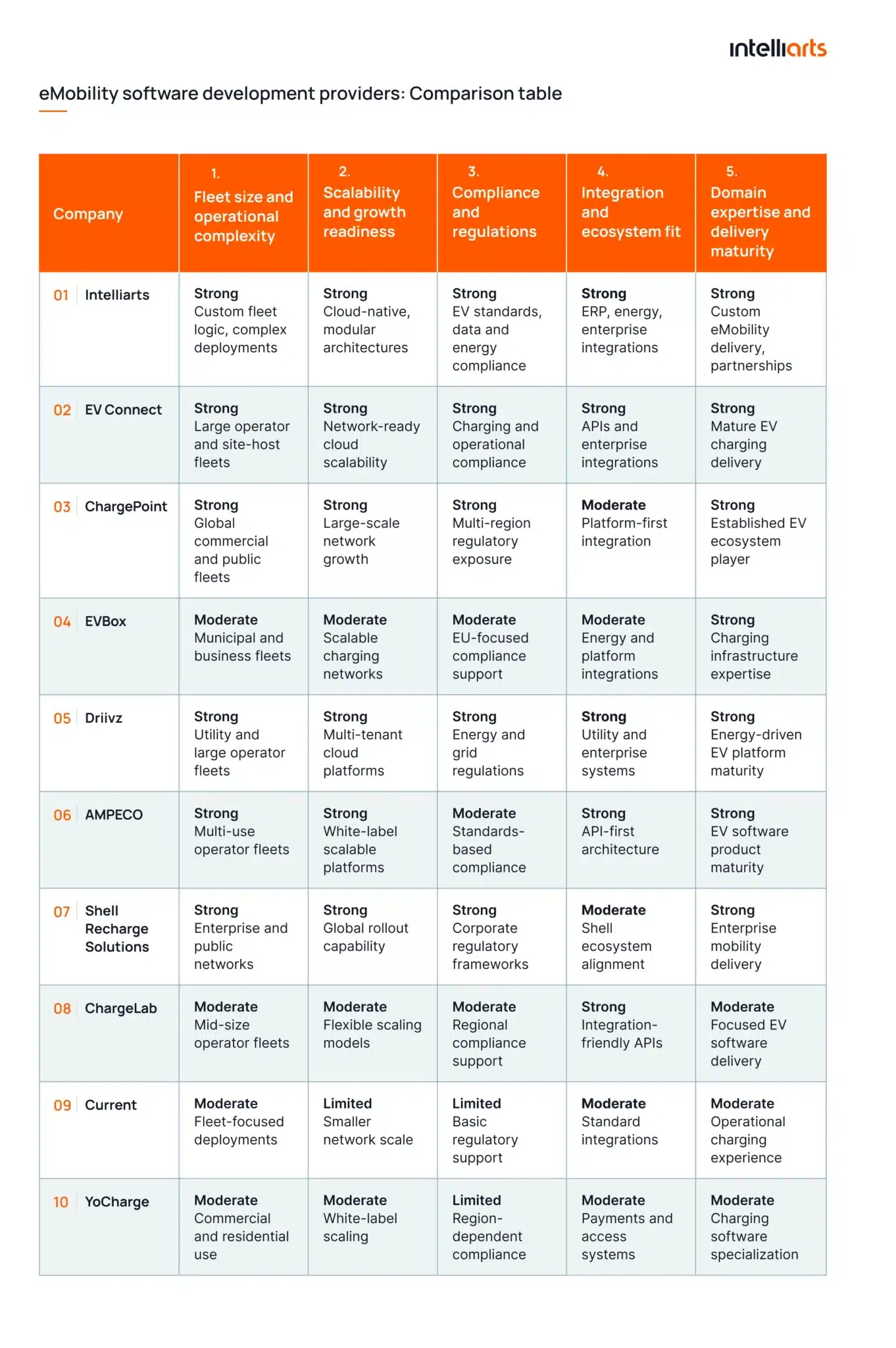
The table below provides a comparison of all the eMobility software development providers from the previous section by every factor mentioned:
Advice on the regulatory landscape of eMobility when working with software developers
When working with software developers in eMobility, understanding the regulatory landscape early is essential to avoid costly rework and compliance risks in a fast-evolving market.
- Ensure your developers have hands-on experience in the electric mobility industry and are familiar with regional energy, data protection, and charging standards.
- Validate that compliance is built into the architecture, not added later, especially for billing, data security, and interoperability.
- Require ongoing regulatory monitoring, as rules in the electric mobility sector change frequently across regions.
- Choose partners who can document and demonstrate compliance through audits, certifications, and real deployments.
In eMobility projects, proactive regulatory alignment is as critical to long-term success as the software itself.
You may be additionally interested to find out cost-effective EV charging optimization practices in another our blog post.
Key features to look for in eMobility software solutions
Here at Intelliarts, we often provide technology consultation, where, among other important aspects, we help with choosing an appropriate scope of functions for a project. While an off-the-shelf mobility service provider software may be packed with dozens of features, for a custom solution, it’s important to stay focused on what brings the most value.
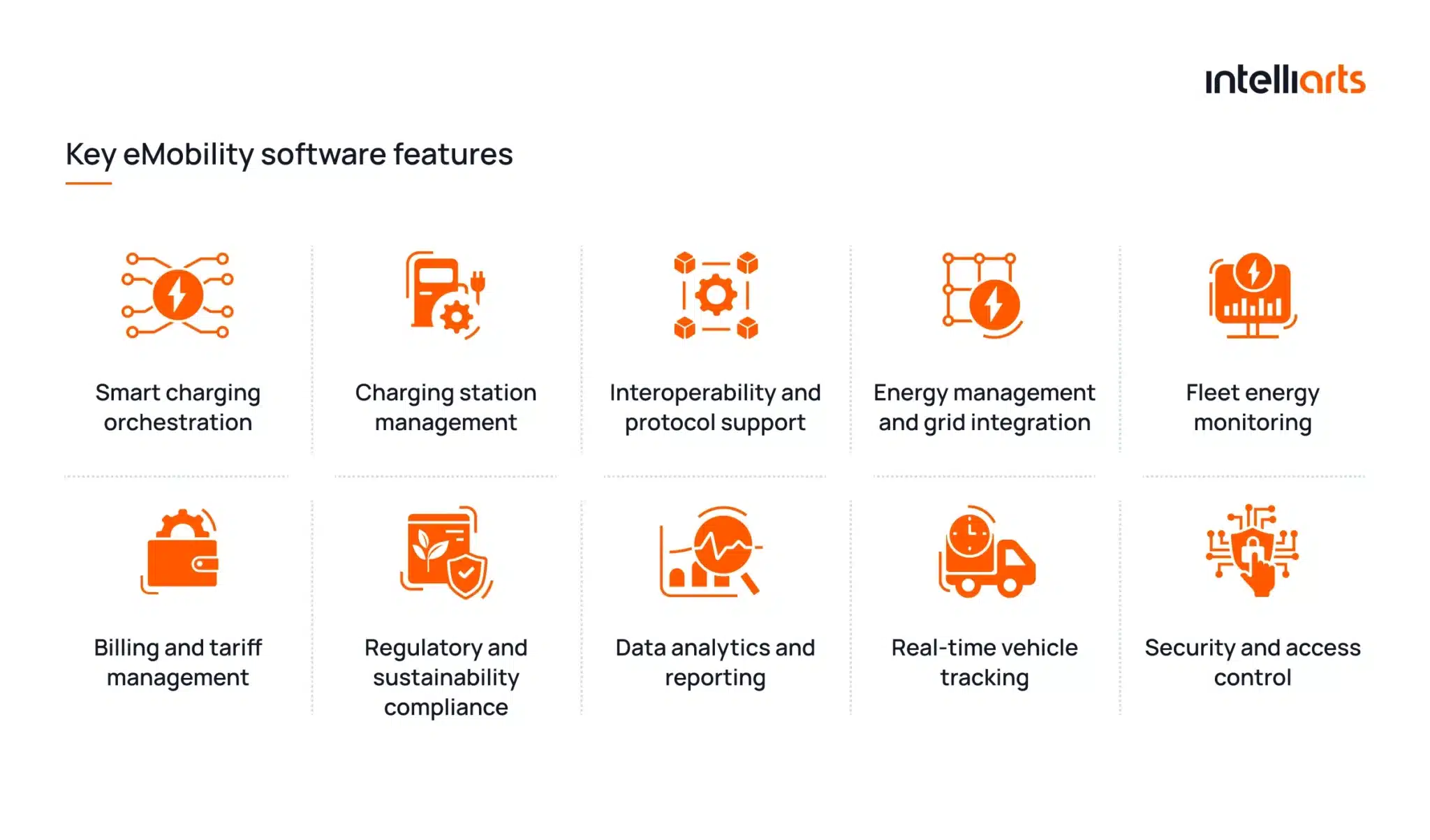
Here’s the list of key features you most likely want to include in your e-mobility applications:
- Smart charging orchestration. This feature dynamically balances charging loads and optimizes energy usage to reduce costs and avoid grid overload.
- Charging station management. Is responsible for tracking charger status, availability, and performance to maintain uptime and efficient utilization.
- Interoperability and protocol support. Should be present in an eMobility software solution to ensure compatibility with diverse hardware and industry standards.
- Energy management and grid integration. Such functionality aligns charging behavior with grid conditions, renewable energy availability, and demand-response programs.
- Fleet energy monitoring. Enables operators to track real-time energy consumption and identify efficiency gaps across vehicles and routes.
- Billing and tariff management. This component automates pricing, invoicing, and payments while supporting flexible tariffs across users and charging scenarios.
- Regulatory and sustainability compliance. Is responsible for supporting EV regulations, emissions reporting, and sustainability requirements across regions.
- Data analytics and reporting. With this feature, operational data is transformed into insights for optimization, forecasting, and strategic decision-making.
- Real-time vehicle tracking. Provides continuous visibility into vehicle location and status to improve coordination and service reliability.
- Security and access control. Ensures protection of infrastructure, user data, and transactions through authentication, authorization, and encryption.
In eMobility projects, most problems do not come from chargers or vehicles. They come from software that was not designed for real operational load. — Ihor Rudnyk, an eMobility Tech Specialist at Intelliarts
Important note. When planning for custom software development emobility, you may want to omit some features or add others, like extended EV charging data analytics, integration capabilities, and so on. That’s normal practice. Use the list above to guide your decision-making on what scope of features to include, but don’t limit your product only to them.
The future of eMobility software
eMobility software is entering a new phase, which is largely affected by increasing EV adoption and expanding charging infrastructure. However, it’s also important to account for rising regulatory pressure.
The trends and predictions that may await the industry in 2026 and beyond are provided in the infographics below:
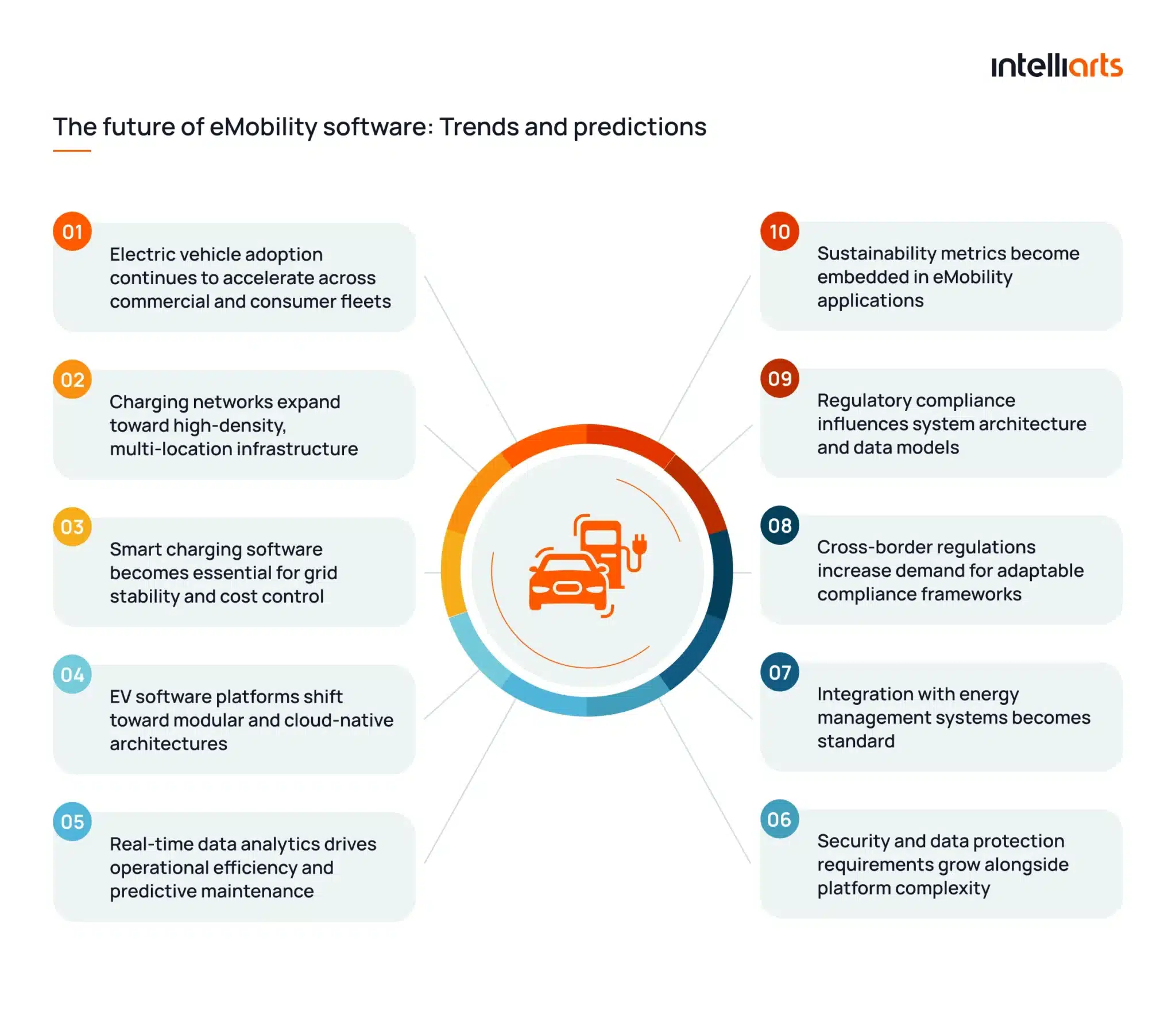
By 2026 and beyond, eMobility software will evolve from operational support tools into core infrastructure for the electric mobility industry. Platforms that successfully combine scalability, sustainability, and compliance will define market leaders.
Final take
Choosing the right eMobility software approach is a practical business decision that affects daily operations and long-term growth. Success depends on working with experienced partners and understanding regulatory requirements. Software should integrate smoothly with existing systems and support future expansion.
Looking for a trusted eMobility software development partner for your best project? Here at Intelliarts, we have more than 25 years of experience providing eMobility, energy, AI, ML, and other solutions under our belt. We are oriented towards long-term collaborations, with some of our projects spanning more than 15 years. We also have a 90% customer return rate and 54% of senior staff engineers. Don’t hesitate to reach out for more details and consultation.
FAQ
What should I look for in an eMobility software partner?
Look for proven domain experience, strong system architecture skills, and an understanding of charging, energy, and vehicle ecosystems. A reliable partner should demonstrate long-term thinking, transparent processes, and real-world deployments. Strong emobility partnerships are built on interoperability expertise, security practices, and the ability to support you beyond initial delivery.
How can I check if the software is compliant with regulations?
Start by verifying support for recognized standards and certifications, such as OCPP, ISO 15118, GDPR, and local energy regulations. Ask for compliance documentation, audit results, and references from regulated markets. In the electric mobility industry, regulatory readiness is proven through continuous updates, testing, and close alignment with regional authorities.
How does eMobility software integrate with existing systems?
Modern platforms rely on APIs, middleware, and standardized protocols to connect with ERP, billing, CRM, energy management, and vehicle systems. Well-designed e-mobility applications are modular and integration-ready, minimizing disruption to your current stack while enabling real-time data exchange across devices, users, and back-office operations.